The Glencoe massacre


   'Glencoe. A gloomy, eerie place, a valley of sorrow hewn out of mountains of guilt'.    

A convention is being organised of which the theme is Scotland. This has given me the pretext of finally ordering a kilt and sporran from the Highlands. 'Finally', because the idea has always appealed to me. Naturally the kilt would have to be the tartan of my mother's clan, and the motto stamped on the seal that embellishes the sporran is "Aonaibh ri chéile" which basically means "Unite".
Traditionally the clan Cameron defended King Robert the Bruce. They fought the 'lowlanders' at the Battle of Bannockburn in 1314 and the Battle of Halidon Hill in 1333. As they were also engaged in numerous clan battles during the 14th, 15th and 16 centuries it could be assumed that they were a fairly bellicose bunch.

During the civil war, the Battle of Inverlochy in 1645, the Camerons allied with the Macdonalds defeating the Covenanters of the clan Campbell, but one year later the Campbells had a serious conflict over land with the clan Lamont. The Lamont castles were taken (Toward and Ascog) and although Sir James Lamont surrendered accepting 'just terms' for the sake of his people, the Campbells subsequently massacred more than 200 of Lamont's followers including women and children. It is said that from a particular tree, 35 victims hung from its branches, and 36 men were buried alive near its roots. This was known as the Dunoon Massacre.

But the most notorious massacre, despite there being less victims, was of Glencoe which took place forty four years later.

With Viscount Dundee, the Camerons had formed a confederation loyal to James VII to counter the venue of William of Orange, then king of England. They were known as 'Jacobites'. A force of about 2,400 (among them 18 year old Rob Roy McGregor) positioned themselves on the heights of the Pass of Killicrankie waiting to attack the government army sent to contend with them. After firing off a few rounds from what muskets the Scots possessed, they charged, engaged in close quarter combat, and completed routed their adversaries- "swept away by the furious onset of the Camerons". This last but memorable Scottish victory is known as the 'Battle of Killiecrankie' (27th July, 1689).

Consequently the Scottish clan chiefs were each promised £12,000 to be administrated by the Earl of Breadalbane, on condition that they swear allegiance to King William. It was decreed that they must sign the oath before the 1st January, 1692. Those who failed to do so, preferring to continue the fight, would be ruthlessly hunted down. The chiefs all signed but they were never paid. The last of the clan chiefs to sign, five days late, was Alastair Maclain of Glencoe. This delay was allegedly due to his waiting for the approval of the disposed King James.

In view of the outcome of the Battle of Killiecrankie, the fact that John Campbell, Earl of Breadalbane had a grudge against the Macdonalds, and that Sir John Dalrymple of Stair, joint Secretary of State, wanted to make a exemplary show of government muscle, they conspired a plot.

Although they knew that the Macdonalds had signed the oath, they pretended that this was not the case in order to procure the king's signature to punish the clan.
The Campbells were sent to Glencoe in February 1692 and, according to the usual custom, were graciously received by the Macdonalds. During the night of the 13th however, the Campbells arose and attacked their hosts killing 38 in their homes or as they tried to escape. Alastair Maclain was killed in his bedroom. Those who survived fled to the snow covered hills, where a further forty women and children died from exposure, their homes having been burnt down.

Two of the Campbell lieutenants refused to carry out the orders and even broke their swords to emphasise their revolt.

It was a despicable breach of the ancient law of Scottish hospitality, and as it was also authorised by a government claiming to be dedicated to justice, it has never ceased to be regarded as one of the most shameful episodes in Scottish history. The scandal was all the more accentuated by the fact that those responsible remained 'Scot free'. Thus an irreconcilable state of affairs continued to reign in Scotland.
___

 Fascimili of Dalrymple's order to the Campbell forces.

'You are hereby ordered to fall upon the rebels, the M'Donalds, of Glencoe and putt all to the sword under seventy. You are to have special care that the old fox and his sons doe upon no account escape your hands. You are to secure all the avenues, that no man may escape.... This is by the King's special command, for the good of the country, that these miscreants be cutt off root and branch. See that this be putt in execution without feud or favour, else you may expect to be treated as not true to the king's government, nor a man fitt to carry a commission in the king's service. Expecting you will not faill in the fulfilling hereof as you love your selfe, I subscribe these with my hand. att Balicholis Feb: 12, 1692.'  

For their Majesties service                                                 
To Capt. Robert Campbell 
of Glenlyon                                                            (signed)  R. Duncanson                  
 ____
Text and transposed image (Glencoe) © Mirino (PW). Sources- Scotland History of a Nation. Further information from Wikipedia. Phrase below image attributed to Geddes MacGregor. Facsimili with grateful thanks to Wikipedia. November, 2009

Identité


Eric Besson, ancien conseiller des Finances au près de Ségolène Royal, écrivain du livre 'Qui est Mme. Royal?', après que cette dernière ait posé publiquement la question dépréciative devant des ouvriers, 'Besson, vous le connaissez vous?', a justement suggéré récemment qu'il devrait y avoir un débat sur l'identité nationale.

Cette première petite 'polémique d'identité' a eu lieu après que Besson ait quitté le parti socialiste à cause d'une discorde concernant la gérance financière du parti. Ultérieurement il accepta le poste offert par François Fillon (et Nicolas Sarkozy) pour devenir ministre de l'Immigration, de l'Intégration, de l'Identité nationale et du Développement solidaire pour le gouvernement actuel (15 janvier, 2009).

Pour ce qui est de l'identité nationale, il ne serait pas seul à penser que la burqa, par exemple, ne correspond pas tout à fait avec l'identité française, ni Européenne.

Certains pourraient suggérer que ceci fasse partie du contrecoup du colonialisme européen. Il y a même d'autres qui croient que les européens doivent être condamnés éternellement pour le 'crime' de colonialisme du 19 ème siècle. J'en suis moins persuadé de la validité de cet argument. 

Si l'Europe a imposé aux colonies ses valeurs, sa culture et même parfois une certaine mesure de sa religion pendant cette époque 'd'expansionnisme', c'est possible qu'en termes de sciences, de technologie, d'ingénierie et d'éducation elle a donné beaucoup plus qu'elle n'en a jamais reçue. Le développement des pays concernés (négatif autant que positif) pourrait en être considéré comme preuve.
Il y a même eu des cas où le mariage entre les cultures (britanniques et indiennes, par exemple) semblait avoir fonctionné à tel point positif que l'aristocratie indienne non seulement acceptait 'l'éducation anglaise' pour leur enfants, éventuellement elle l'avait même exigée.

Considérons également les nombreuses réformes sociales et religieuses qu'Ataturk a établi en Turquie bien avant la deuxième guerre mondiale, en proclamant l'égalité des sexes, en donnant aux femmes le droit de vote et le droit d'être instruites, en prohibant le port du voile des femmes et du fez des hommes, en séparant la religion de la politique, et en remplaçant le code Coranique par le code civil suisse.
Pendant une partie de la même période en Afghanistan, (1919-1929) le roi Amanullah a essayé de  modernisé son pays radicalement en rétablissant des relations diplomatiques, en décrétant l'éducation pour les femmes et en rendant l'éducation générale obligatoire. Lui aussi avait interdit le port du voile des femmes et avait même introduit des écoles mixtes. C'est vrai que par la suite il devait se heurter à beaucoup d'opposition de l'intransigeance des autorités tribales et religieuses, mais cet instinct à moderniser existait bel et bien déjà il y a presque un siècle.

Sans vouloir donner l'impression de la moindre intolérance religieuse, il me semble néanmoins qu'il y ait une régression sociale dans certains pays musulmans due à la pression et à l'influence croissantes de l'extrémisme islamique pendant les trente-cinq derniers années.

L'extrémisme religieux ne devrait jamais être utilisé comme une référence pour valider les idées religieuses qu'il défend. Certains cependant considèrent qu'on doit retourner aux racines, afin de redécouvrir son identité religieuse. Dans ce cas, à partir de quelles racines essentielles faut-il commencer? La logique indiquerait avant la naissance même du Prophète, alors pourquoi pas avant l'ère des Bouddhas de Bâmiyân, ou peut-être avant la naissance d'Abraham, le père des trois religions monothéistes, ou avant la civilisation des Étrusques, ou celle interminable de l'Egypte antique, ou avant l'ère de la Vénus de Willedorf, ou même avant l'Âge de Pierre?.. Où se trouvent finalement les racines de cette identité, la verité religieuse, celle enfin de l'humanité?

Pour empêcher une religion de devenir un dogme impraticable, sans pourtant trahir sa vérité ou perdre sa beauté essentielles, ne devrait-elle pas être permise à évoluer positivement avec la civilisation? Ce processus n'a-t-il pas été toujours naturel et quasi imperceptible à travers l'histoire de la civilisation? Essayer de restreindre ce qui est naturel ne crée que le désordre, la régression, l'hypocrisie et le conflit. La chute de certaines civilisations anciennes en est aussi la preuve.
Nous avons eu, après tout, l'avantage des siècles d'évolution et d'éducation, des 'trials and errors' de l'humanité. Nous sommes parfaitement capables- et peut-être toujours davantage d'ailleurs- de discerner le bien du mal.

Si, par exemple, l'ensemble des musulmans est peu disposé à réfuter catégoriquement l'hypocrisie abominable et le mal odieux d'employer la technologie moderne pour tuer aveuglement au nom de l'Islam autant de personnes innocentes que possible, alors il doit y avoir un problème très sérieux d'identité culturelle, sociale et religieuse.

En tous cas peut-être Eric Besson a raison de croire qu'un débat sur l'identité nationale pourrait être utile. Il se peut quand même que le sujet soit plus profond et moins simple que l'on puisse d'abord croire. 
___
 italiano
___
La burqa (qui veux dire 'coudre ou replâtrer') a été portée longtemps avant l'Islam. Employée comme protection contre les tempêtes de sable, elle était également portée comme forme de dissuasion contre la possibilité de celles ainsi habillées- les femmes et les jeunes filles- d'être enlevées lorsque leur communauté était envahie par des assaillants. (La dissuasion ayant été l'impossibilité aux tels moments critiques de discerner une jeune femme d'une vieille).
Malgré la croyance de beaucoup de musulmans que le 'hadith' exige des hommes et des femmes un comportement modeste en public, (hijab) il n'y a aucune mention de la burqa dans le Coran.
__

Text and image © Mirino (PW) October, 2009

Dēmokratía


Maybe it's unfashionable to believe that there's only one valid form of democracy. Today many people seem to be convinced that forms of democracy are determined by tradition, culture and religion (if not personal interest). Would this then explain why Russian democracy doesn't correspond with American democracy, and why Iranian democracy is a far more baffling version? It would appear that such 'degrees' of democracy are then inevitable.

In his interview with Le Figaro (7/9/2009) Hamid Karzai seemed to condone the massive election fraud of the last Afghan elections (August, 2009) on the grounds that the Afghan democracy was 'young'. In this case then, the principle of democracy must also depend on its age. Perhaps there's an adolescent democracy, a middle-aged democracy and a senile democracy. Democracy would thus seem to be determined by time, as though it had a maturity peak and a limited life span.

If this is so would it be really worth fighting for? If he who is supposed to be regarded as the elected President of Afghanistan, doesn't defend the basic principles of democracy right from the start, for what reason is Nato sacrificing the lives of young soldiers? What cause is the Afghan army defending? What principle of freedom and justice did the Afghan civilians risk life and limb voting for ?

Of course it's perfectly understandable that the security situation in Afghanistan doesn't easily permit the authorities to cancel fraudulent election results in favour of going through the difficult process again in a totally honest and correct way. But surely the principle should have been defended. Karzai had the opportunity to show the world that he was worthy of what the Afghans had been fighting for non stop since 1979.

If a coalition government was out of the question, could he not have promised new elections for 2010? In any case, never should he have accepted the election fraud, as he did according to the Figaro interview, as a quasi normality.

Yet strangely the eminent heads of Western democracies (including the new one who knowingly scrutinises the horizon, his brow furrowed from the heavy burden of 'I can take it' responsibility) seem to find this acceptable enough to continue sending more troops to defend the noble (or fraudulently ignoble) cause. And one also imagines poor Massoud turning in his grave.

(UN data shows that the official vote count of the last elections in Afghanistan exceeded the number of voters in some provinces by 100,000 or even more).
___
Italiano

Image with thanks to Google and rp-online. Text © Mirino (PW) October, 2009

Nobellicose Prize


With the same logic, one wonders why the Nobel peace prize wasn't awarded to Neville Chamberlain for his foreign policy of appeasement as British Prime Minister from 1937 to 1940. Notably for his having obtained 'Peace in our Time' by signing the Munich agreement in 1938.

True that the 'time' became radically cut down to a year's grace, but maybe this would have been judged as better than nothing, and still time enough to have awarded him the Nobel appeasement prize.

That Russia and Cuba are the first to officially congratulate Obama is also a revealing factor.
All we need now are Iran, Syria, Libya, China and North Korea to join in the chorus to add to the hilarity.

Perhaps this would be the 'encouragement' Obama refers to, towards further international appeasement, compromise or cession..
___
italiano
___

Image with thanks to Wikipedia. Text © Mirino (PW) October, 2009

La femme


Le sourire, la ferme, douce et savante touche de ses mains, la douceur de sa poitrine, les courbes parfaites de ses cuisses, la cambrure fascinante de son dos montant entre les subtils creux pelviens aux fesses magnifiques.
Ces moments magiques rehaussés par l'éclair dans ses yeux et son teint lumineux. Secret de la jeunesse éternelle. Une fleur en pleine floraison qui dure, et durera dans les œuvres innombrables des artistes et écrivains, éternellement.

Shakespeare immortalisa sa beauté dans ses sonnets, et Tennyson révéla son paradoxe de puissance et d'impuissance dans sa poésie.
Leonardo da Vinci saisit sa grace et son mystère pour l'éternité.
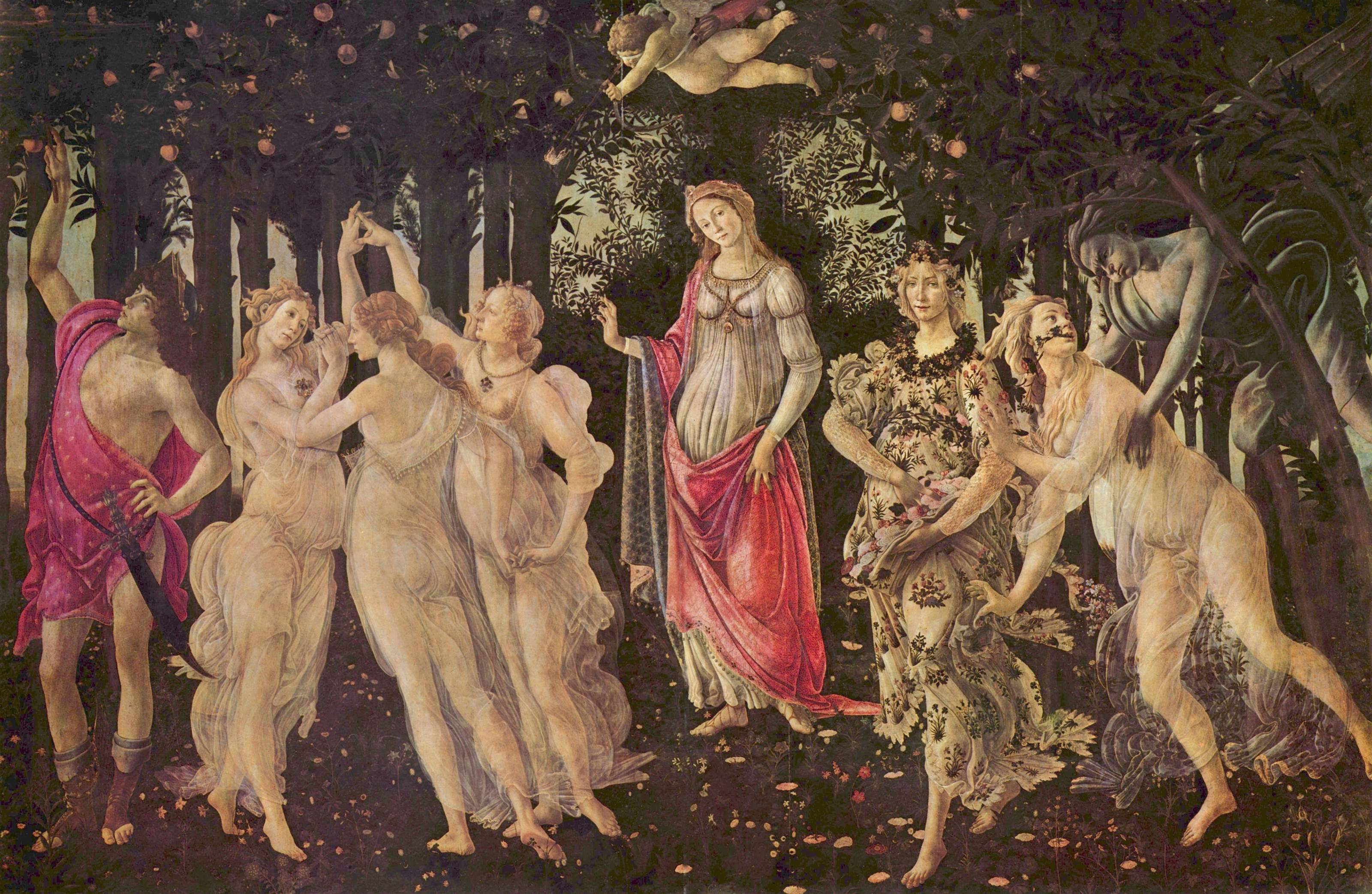
Sandro Botticelli rendit un hommage intemporel à sa délicatesse, son rayonnement éthéré et son galbe.
Hans Holbien éternisa son élégance et sa symétrique dans une richesse de couleurs fabuleuses.
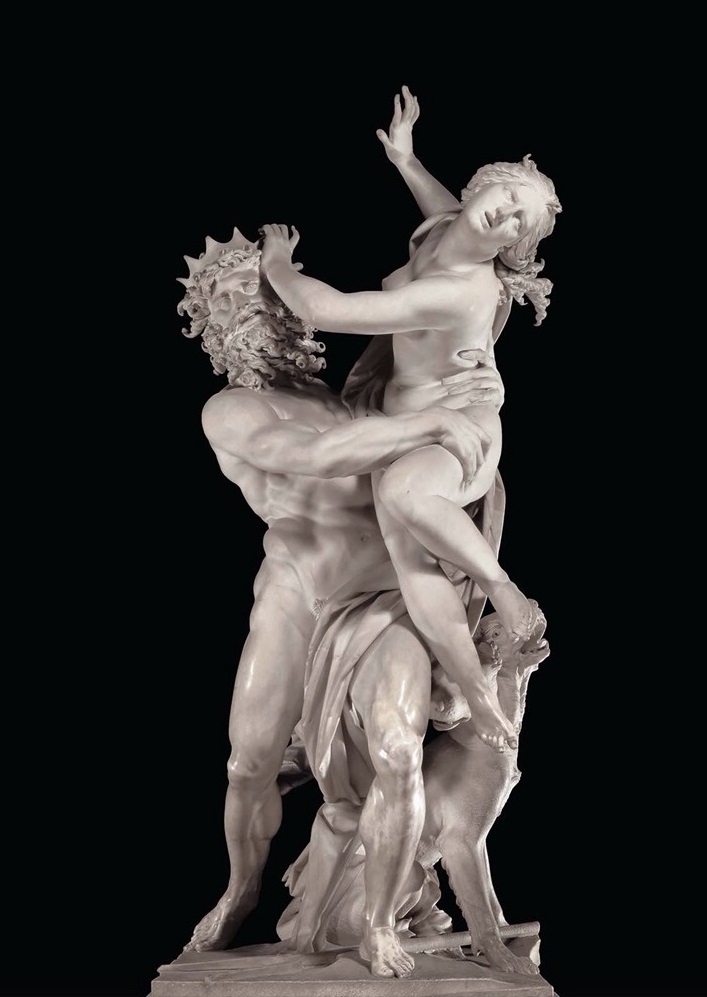
Bernini sculpta le désir toujours actif qu'elle évoque, son impuissance, révolte tempérée avec la complaisance.
Vermeer dépeigna superbement son dévouement domestique admirable.
Fragonard peigna son innocence et sa patience.
Boucher présenta généreusement sa volupté, son invitation apparemment inconsciente et intemporelle.
Rossetti dépeigna sa spiritualité sensuelle.
Renoir mit en évidence son parfum naturel, sa douceur de son charme.
Et Klimt vêtit son intimité mais éternisa une sensualité glorieuse sinon éphémère.

Chaque âge a sa découverte spéciale. Les femmes semblent bien plus averties de la profondeur du changement qui les transforment de l'enfance à la femme que les hommes semblent, concernant la profondeur de leur propre transformation à l'âge de la puberté.
Pour une quantité étonnante d'entre nous, notre compréhension des femmes, sinon plus qu'une notion vague, est finalement atteinte à l'âge où nous sommes beaucoup moins capables de les satisfaire entièrement. La Nature ou Dieu semblerait avoir un sens de l'humour cruel, ou un sens de justice poétique. Mais certains hommes peuvent vivre une vie entière complètement inconsciente de la vraie nature et des désirs des femmes.

Elle a toujours été la source de l'inspiration des artistes et des auteurs dans toute l'histoire de la civilisation, et encore plus tôt (Vénus de Willendorf, 24.000 BC - 22.000 BC). Ils lui ont toujours rendue le plus grand hommage et respect, et pour cause.
Une femme est de plusieurs manières puissante, et peut-être pour cette raison elle n'a jamais eu besoin d'être une Déesse déléguée. Comme elle produit la vie, avec le petit goût d'aide masculine nécessaire, n'est-elle pas déjà une Déesse?
Malgré les toutes premières reconnaissances, pour compenser notre manque relatif de potentiel, une ignorance à leur égard, et ce qui pourrait également être une jalousie inhérente depuis la nuit des temps, nous avons ainsi limité la délégation des Dieux et des Prophètes uniquement aux hommes.

Les vieilles habitudes meurent difficilement, particulièrement quand elles sont décrétées par le dogme et la religion. Pourtant l'éducation, l'appréciation et la sensibilité ont toujours eu un effet positif pour corriger quelque peu la tendance. Mais c'est certain que davantage de temps est toujours nécessaire.

Peut-être c'est une erreur de croire que la beauté d'une vraie femme est la victime du temps. La vie en est la victime, mais pas l'essence de la beauté. Chaque moment et chaque âge de la vie d'une femme est particulier, comme une rose de longue floraison qui maintient toujours l'essence de son parfum individuel, et de son rayonnement de jadis, jusqu'à la chute du dernier pétale.
__

Text and image- 'Gaea' (la terre) from 'The Elements' © Mirino (PW) October, 2009

Antithetics


What has been disturbingly revealing in trying to exchange opinions with other Europeans via the Web during the last three or four years, is the surprising amount of unabashed prejudice and anti-Occidentalism, which seems to boil down to a general distrust in democracy.
This is apparent in the systematic refusal to acknowledge historic facts, and a unilateral presentation of international events, always supported by precisely narrated, one-sided stories.

Israeli soldiers are thus presented as cruel, racist, robotic monsters, as bad, if not even worse, than the Nazis ever were.
Afghanistan would be invaded by Western imperialists (as was Iraq) for 'multinational interests'. Whoever is elected there, in whatever way, whether it be Karzaï or Abdullah, would far more likely be an American stooge than an elected representative of the Afghanis. Naturally the same applies, in this blurred vision, to the Iraqi government.

Secretly one might admire Osama bin Laden, tacitly approve of al-Qaida, and more openly, of the Taliban 'defenders of Afghanistan'. (Massoud would be a myth or a 'has been'). Hamas, of course, would represent the brave defenders of Palestinian freedom, and the Hezbollah would be the only legitimate organisation that carries the noble and weighty responsibility of the defence of Lebanon. The majority of poor prisoners remaining in Guantanamo detention camp would be misguided martyrs brutalised by the CIA, the same independant US agency that would also have been responsible for organising the 11th September attacks.

One can try to present other, more coherent view points, producing the clearest evidence of premeditated horrors and alluding to pertaining historic facts. One constantly repeats oneself, naively imagining that no one can deny what is so blatantly obvious, but all to no avail.
Nobody will prove you wrong, yet you will never be accorded even an arguable point. You will never be able to breach the thick wall of prejudice, hate, distrust and negation.

There is, or was, the constantly used expression exporting democracy, as though it were Coca Cola. As though entire nations of people are too backward to know what they are actually doing, or have never enjoyed any relative freedom before. As though democracy can be imposed like Soviet Communism, or tyrannical totalitarianism.

George W. Bush has been the overused scapegoat, ever since the back lash of al-Qaida and the insurgent henchmen after the first elections in Iraq. No one else in the myopic eyes of his critics can more fully represent 'evil'. In comparison, according to such obscured vision, Saddam Hussein would have been a poor, misunderstood martyr.

And perhaps for them, even Ahmadinejad has a point. If the Holocaust was, as the Iranian President informs the world, just a myth, it would be difficult to find someone more suitable who could incarnate an even worse Hitler, capable of making the 'myth' an even worse reality. We hear 'the Supreme Guide' Ali Khamenei of Iran subtly affirming, that the 'destructive, cancerous Zionism' is nibbling away at the 'Muslim world' which, comparing land masses between Israel and the surrounding Muslim nations is another ridiculously distorted and incredibly magnified observation that, although hateful, can hardly otherwise be taken very seriously.

But the world is blest with extremists everywhere. Even in our democracies. And Israel, of course, is a real democracy. But the difference between Israeli extremists and Palestinian extremists is that the latter are generally more idealised than criticised by the Palestinians, whereas the former are generally more criticised than idealised by the Israelis.
The former, in fact, are criticised by the whole world, whereas the latter seem to be regarded, even by the U.N., as an 'inexorable fatality'. The tacitly agreed price the Israelis should pay for the privilege of living in Israel, is to tolerate terrorists as their next door neighbours on an indefinite basis. Maybe it's also the price the United Nations 'indirectly impose' on the Israelis for the UNs' having failed in establishing the 1947 Israeli-Palestinian agreements. But if this is so, they too, like so many others suffering from blurred vision, are 'antithetically' off target, for the categorical refusal of the agreements came from the Arab League and never from the Israelis.
____
Italiano
____

Text and Images © Mirino (PW) September, 2009